A devil’s ambiguous statement ‘’Criticising is the job that requires zero qualifications’’

In The Name of Allaah, The Most Merciful, The Bestower of Mercy

Shaikh Muhammad Sa’eed Raslaan (may Allaah preserve him) stated:

”It is incumbent upon (a person) to be acquainted with what he criticizes and what he is not to criticize, and to make a distinction between what he commends and what he is not to commend; and if not, then there will be involvement in disparaging (one) who is not to be disparaged or praising without a right reason. And indeed Al-Haafidh Ibn Hajr (rahimahullaah) summarized this (affair) in his statement: ”Recommendation is accepted from the one who is acquainted with its reasons and not from the one who is not acquainted with it; so that he (i.e. a person) may not give a recommendation solely based on what is apparent in the beginning without pursuing (the affair practically) and without examination. Likewise, it is obligatory that disparagement and commendation are not accepted except from a person who is trustworthy and cautious. And disparagement is not accepted from one who exceeds the limits in it, such that he disparages with what does not necessitate rejection of the narration of a Muhaddith, just as (recommendation) is not accepted from the one who solely holds on to the apparent (affair of a person) and then gives a commendation.” [Source:Dawaabit At-Tabdee: page: 61-62]


Shaikhul Islaam Ibn Taymiyyah (rahimahullaah) said:

Likewise refuting ahlul bidah such as the Raafidah and other than them; if he (i.e. the person) does not do it with the intention of clarifying the truth and to guide the people out of mercy good treatment towards them, then his action will not be righteous.  And if he becomes harsh in censuring bidah and sin, then his intention should be to clarify that which it contains of corruption, so that the slaves are warned against it. [Minhaajus Sunnah 5/239]


Imaam Muslim (rahimahullaah) said:

know-may may Allaah (The Mot High) grant you success-that it is obligatory upon everyone (i.e. the scholars who criticise or commend narrators of hadeeth) to know the distinction between the authentic chains of transmission and the faulty ones, and the (trustworthiness, precision etc) of the narrators of (the authentic chains) as opposed to those who have been charged (with weakness, forgetfulness, fabrication etc in their narrations); so that nothing is transmitted from these narrations except that which whose narrator is sound and blameless in his narrations, and to avoid that which is from those who have been charged with (weakness, forgetfulness, fabrication etc) and the obstinate ones amongst ahlul bidah. [Muqaddimah Saheeh Muslim: page 61]


Shaikh Muhammad Baazmool (may Allaah preserve him) said:

Speaking about the people with either criticism or praise is a field of knowledge in Islam and there are many affairs of Islamic Jurisprudence in which this is found.   For example the affair of seeking knowledge: This affair is abiding and there has to be criticism and praise within it.  One of the Salaf said that whenever they wanted to listen to hadeeth from a person, they would ask about him until the people thought that they wanted to marry him.  And another one said, ‘’Indeed this knowledge is religion so look to the one you take your religion from.’’  What is the meaning of this statement: It means that you are in need of criticism and praise as long as there is knowledge of Islam to be sought after. [Quote found in this link: http://salaficentre.com/2012/12/jarh-wat-tadeel-beware-of-the-plots-and-false-arguments-of-the-deceitful-hizbiyyoon/

All praise is due to Allaah.  The Salafi students of knowledge in the West carry out criticism based on knowledge transmitted from the Imaams of the Sunnah in this Era, whilst nullifying the satanic views and innovations of the deviants, the callers to the gates of hellfire and ahlul bidah. As we can see from the above quotes, criticism is not a job that requires zero qualifications; rather the one who applied this statement to the criticisms carried out by the Salafi students of knowledge against the deviants is only seeking to conceal his satanic views and innovations.  This statement of his is false and ambiguous when applied to the people of Sunnah because it is ahlul bidah that criticise Ahlus Sunnah based on falsehood and a desire to conceal their destructive innovations; but as for Ahlus Sunnah (the Ulama and their steadfast students), they carry out criticism based on knowledge and justice.

——————————————————————————————————————————————-

See here—some of the Salafi students carry out of criticism against the deviants in the West.

[1] Salafipublications.com

[2] Concerning al-Jarh wat-Ta’deel, Radd `alal-Mukhaalif and Tahdheer Min al-Bida`    (13 Articles)

Deviated Sects (25 Articles)

[3]The Historical Influences and Effects of the Methodologies of al-Ikhwaan al-Muslimoon Upon the Salaf   (6 Articles)

———————————————————————————————————————————————-

http://www.salafis.com/index.cfm

http://www.nabahani.com/index.cfm

http://www.asharis.com/creed/index.cfm

———————————————————————————————–

The Reality Of Jamiat Ahle-Hadith UK

 http://www.salafitalk.net/st/viewmessages.cfm?Forum=9&Topic=3384

————————————————————————————————

http://www.takfiris.com/takfir/

http://www.shia.bs/

http://www.alhajuri.com/index.cfm

http://www.barelwis.com/

http://www.themadkhalis.com/md/

[Arabic Audio] Shaikh Raslaan (hafidha-hullaah) speaks about Al-Allaamah Al-Faqeeh Zayd Ibn

In this speech Shaikh Raslaan (hafidha-hullaah) quotes beautiful and detailed statements of Zayd (rahimahullaah) found in his explanations of Lum’atul Ittiqaad and Usool Ath-Thalaatha… etc

See Audio on this link

salaficentre.com/?p=12129

Al-Nabahani’s Creed: Part 1 – The Atheistic Creed of the Jahmiyyah and the Creeds of the Mu’tazilah and Qadariyyah Are All Islamic Creeds Despite Their Mutual Contradiction


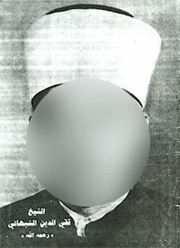
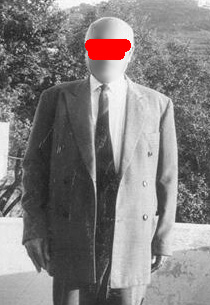
Taqi ud-Din an-Nabahani (1909-1977CE) is the founder of the group “Hizb ut-Tahrir“, the picture on the right – taken in his early years – indicates the traditional Azhari, Ash’ari early upbringing. He was an Ash’ari in aqidah (mixed with some of usool of the Mu’tazilah, Murji’ah and Qadariyyah). He is of Palestinian origin, coming from a Sufi family background. His maternal grandfather was Yusuf bin Ismaa’eel an-Nabahani, a fervent adherent of Tasawwuf and one who authored a book, “Shawaahid ul-Haqq fil-Istighaathah bi Sayyid il-Khalq“, arguing for the justification of seeking and calling upon the Prophet (sallallaahu alayhi wasallam) for rescue from calamity in those things in which only Allaah has power and ability. Given this family background (Ash’ari Sufi with Mu’tazili, Qadariyy usool) it is not surprising to see that in all the books of Taqi ud-Din an-Nabahani, the grandson, the discussion of Tawhid barely extends further than merely affirming Allaah’s existence and around nine or ten attributes (which is not the Tawhid that the Messengers came to establish)

To read further as well as see scanned images of the deviant creed of Nabahani click the link below:

http://www.nabahani.com/articles/wwmefwq-nabahanis-creed-the-atheistic-and-creeds-of-disbelief-of-the-jahmiyyah-mutazilah-and-qadariyyah-are-all-islamic-and-non-conflicting.cfm

Who really was Taqi al-Din al-Nabahani?

Taqi al-Din al-Nabahani – a former Ba’thist Nationalist – set up a political party (Hizb al-Tahrir) whose objectives, methodologies and structures were strongly influenced by that background. He is one of numerous 20th century thinkers – amongst them Hasan al-Bannaa, Abu A’la Mawdudi and Sayyid Qutb – who came under the influence of the prevailing secular ideologies of the time (the pursuit of “social justice” through revolutions) in formulating methodologies of reform amongst Muslims. Like Banna, Mawdudi and Qutb, al-Nabahani has a cult-like following across the world. He had a mixture of an Ash’ari, Mu’tazili belief indicating he was carrying that vile poison of ilm al-kalaam which played an instrumental role in splitting and dividing the Ummah from the second century of Islam onwards. The party cult of al-Nabahani employs secrecy and dissimulation in winning recruits for their cause and they have a very rigid, party structure (based around Communist type parties). Their interpretation of history (as in the true underlying reasons and causes behind the ascendancy and fall of nations) is taken from the same Marxist, Socialist, Communist discourse that centers around the flag and slogan of “social justice”. At the same time they completely ignore what is found in the Book and the Sunnah in relation to the explanation of these matters.

The picture of al-Nabahani to the right should give the reader a good idea of what type of Islam al-Nabahani himself was upon…..

Click here to read further: www.nabahani.com

Who should we take our knowledge from? Shaykh Rabee’

Shaykh Rabee – may Allah preserve him and reward him with good – was asked about taking knowledge from those upon the Salafi Manhaj; he said:

If he was upon the Salafi Manhaj and didn’t have any misguidance (with him) and he calls to the Salafi Manhaj, then it is obligatory that knowledge is taken from him and it is not taken from the people of falsehood.

The salaf used to say: Indeed this knowledge is religion so look (beware) of whom you take your religion from. And if a man used to speak (about the religion) they would say to him: “Name us your men” so if they were people of innovation (that he named) they would not take (any knowledge) from him and if they were from the people of sunnah, then (the salaf) would take from him.

Therefore the religion of Allah is not taken from the people of falsehood, because they are the people of deception and they mix falsehood with truth, so as to propagate their falsehood.

So it is upon the student that he is diligent in taking knowledge from its pure unadulterated sources, from the Salafi books, from those who teach these books and from the sincere truthful ardent ones who spread the Sunnah of the Messenger of Allah – peace and blessings upon him – and spread his correct methodology. And from those who are sincere, truthful and ardent upon guiding the people and saving them from misguidance and from the destructive paths.

Al-Lubbaab min majmoo’ nasaaih wa tawjihaat. Page 185

Safeguarding the Prayer – Shaykh Saalih Al Fawzaan

بسم الله الرحمن الرحيم

Shaykh Saalih Al-Fawzan – May Allah preserve him – was asked about an individual who prays the five daily prayers, but not in the correct times and occasionally misses all of the prayers of a day and prays them all together later on.

The Shaykh said:

Safeguarding the performance of the  (obligatory) prayers at their correct times with the congregation (for men) is obligatory for the Muslim, and it is not permissible to exit the prayer from its (legislated) time.

As Allah says:

إِنَّ الصَّلَاةَ كَانَتْ عَلَى الْمُؤْمِنِينَ كِتَابًا مَّوْقُوتًا

النساء: ١٠٣ 

Verily, the prayer is enjoined on the believers at fixed hours.

[An-Nisaa Verse 103]

Meaning it is obligatory to perform them at specific times, and in a narration:

“Indeed there are actions (done) for Allah in the night that He does not accept in the day and actions in the day He does not accept in the night” (1)

And exiting the prayers from their correct times is neglecting them.

Allah said:

فَخَلَفَ مِن بَعْدِهِمْ خَلْفٌ أَضَاعُوا الصَّلَاةَ وَاتَّبَعُوا الشَّهَوَاتِ فَسَوْفَ يَلْقَوْنَ غَيًّا

إِلاَّ مَنْ تَابَ

مريم ٥٩-٦٠

Then, there has succeeded them a posterity who have given up As-Salat  [i.e. made their Salat to be lost, either by not offering them or by not offering them perfectly or by not offering them in their proper fixed times, etc.] and have followed lusts. So they will be thrown in Hell.

Except  those who repent…

[Soorah Maryam Verse 59-60]

And combining between two prayers – in the time of one of them ie Dhuhr with Asr or Maghrib with Isha – is not permissible except due to a legislated excuse. As for combining the prayers for a complete day then this is not permissible and the prayer is not correct in this manner.


Al muntaqa 5/56

(1) Advice of Abu Bakr to Umar whilst on his deathbed

See link for full narration

http://www.sayingsofthesalaf.net/abu-bakr-to-umar-on-his-deathbed/

Praising Innovators – Shaykh Muhammad bin Haadi

The questioner says—may Allah reward you with good:

‘There is a person who praises the people of innovation and rejects the speech of the scholars of the Sunnah concerning them, and he also defames the scholars of the Sunnah and so on.’

Shaykh Muhammad ibn Hadi:

“Whoever praises the people of innovation, without doubt, he is from the innovators; rather, he is without doubt from their callers. The people asked our Shaykh—may Allah’s Mercy be upon him—Shaykh ‘Abd al-’Aziz ibn Baz, during the lesson of the explanation of the book Fadl al-Islam is the person who praises the people of innovation considered from them. He said, yes, there is no doubt that he is from them; rather, he is from their callers. This is available in his voice and in writing, all praise is for Allah, and there is no doubt concerning this.”

See: http://ar.miraath.net/fatwah/3909

Translated by Abul Hasan Maalik Al Akhdar

LIVE TALK – The Importance of the Salaf & Time – Abu Hakeem & Abu Idrees

The Importance of the Salaf & Time

Who are the Salaf?

How did they utilise their time?

The lectures will be delivered by our brothers Abu Hakeem Bilaal Davies and Abu Idrees Muhammad Khan.

Thursday 7th February 2014
Starts at 7.00pm Insh’Allah
It will also be broadcast on ‘sunnahradio.net’

Brothers & Sisters all welcome.

early-generations-WEB


Woke up After Fajr and She was Menstruating – Shaykh Uthaymeen

بسم الله الرحمن الرحيم

Shaykh Uthaymeen -Rahimahullah- was asked concerning a woman who woke up for fajr after the sun had risen and realised she was now menstruating.

Paraphrasing:

“She has to make up the fajr prayer after her menses, because the origin is that she was pure; i.e. she knows she was not menstruating when she went to sleep, she woke after the time of fajr, so all she knows for certain is that she was menstruating after the time of fajr came in and therefore she makes up the fajr prayer.”

The Shaykh went on to say:

“It saddens me that she did not wake for the fajr prayer except after the sun rose, because it is an obligation upon mankind that they guard themselves and that they take the required means so that they can wake and pray on time.”

Majmoo’ Fataawa 219/12

[1] Intro: The difference between legislated and innovated acts of worship

 بِسۡمِ ٱللهِ ٱلرَّحۡمَـٰنِ ٱلرَّحِيمِ

Shaikhul Islaam Ibn Taymiyyah (rahimahullaah) said:

Indeed, there has been much confusion in this subject matter just as it is the case in the subject matter of halaal and haraam.  Indeed a group of people make permissible some of the things which Allaah has declared impermissible and others declare impermissible some of those things which Allaah has made permissible.  Likewise some people innovate acts of worship that have not been legislated by Allaah; rather He (The Most High) prohibited them.

The foundation of the religion of Islaam is that the permissible affairs are those that Allaah and His Messenger have made permissible, and the impermissible affairs are those that Allaah and His Messenger have made impermissible.  It is not allowed (or befitting) for anyone to leave the straight path which Allaah sent His Messenger with.  Allaah (The Most High) said:

وَأَنَّ هَـٰذَا صِرَٲطِى مُسۡتَقِيمً۬ا فَٱتَّبِعُوهُ‌ۖ وَلَا تَتَّبِعُواْ ٱلسُّبُلَ فَتَفَرَّقَ بِكُمۡ عَن سَبِيلِهِۦ‌ۚ ذَٲلِكُمۡ وَصَّٮٰكُم بِهِۦ لَعَلَّڪُمۡ تَتَّقُونَ

”And verily, this is my Straight Path, so follow it, and follow not (other) paths, for they will separate you away from His Path. This He has ordained for you that you may become pious’”[6:153]

Abdullaah Ibn Mas’ood (radiyallaahu-anhu) reported that the Prophet (sallal-laahu-alayhi-wasallam) drew a line for us and said: ”This is Allaah’s Straight Path.” Then he drew lines to its right and left and then said: ”These are other paths. Upon every one of them there is a devil calling towards it.” Then he recited: وَأَنَّ هَـٰذَا صِرَٲطِى مُسۡتَقِيمً۬ا فَٱتَّبِعُوهُ‌ۖ وَلَا تَتَّبِعُواْ ٱلسُّبُلَ فَتَفَرَّقَ بِكُمۡ عَن سَبِيلِهِۦ‌  ”Indeed this is My Straight Path, so follow it. And do not follow other paths; they will separate you from His Path.” [Hadeeth reported by Imaam Ahmad  in Al-Musnad 4437]

Indeed Allaah has mentioned in Soorah Al-An’aam, Soorah Al-A’raaf and other them regarding the deeds the idol worshipers were rebuked for, when they made impermissible the things that Allaah (The Most High) have not declared impermissible, such as the Baahirah (i.e. a she-camel whose milk was spared for the idols and nobody was allowed to milk it) and the Saa’ibah (a she-camel let loose for free pasture for their false gods, e.g. idols, etc., and nothing was allowed to be carried on it).   They (also) made permissible those (deeds) which Allaah made impermissible, such as the killing of their children, and they instituted a religion which Allaah did not allow.   Allaah (The Most High) said:

أَمۡ لَهُمۡ شُرَڪَـٰٓؤُاْ شَرَعُواْ لَهُم مِّنَ ٱلدِّينِ مَا لَمۡ يَأۡذَنۢ بِهِ ٱللَّهُ‌ۚ

”Or have they partners with Allah (false gods), who have instituted for them a religion which Allah has not allowed.” [42:21]

And there were impermissible affairs which they established as acts of worship, such as shirk, and lewd behaviour, such as Tawaaf around the Kabah, whilst being naked.

To be continued In-Shaa-Allaah


[Source: Al-Ibaadaat Ash-Shar-iyyah Wal-Farq Baynahaa Wa Baynal Bid’ah (page 7-8). Abridged and partly paraphrased]